
Blue Ocean Ventures
Nov 12, 2024
2 min read
Aquaculture Technology Trends
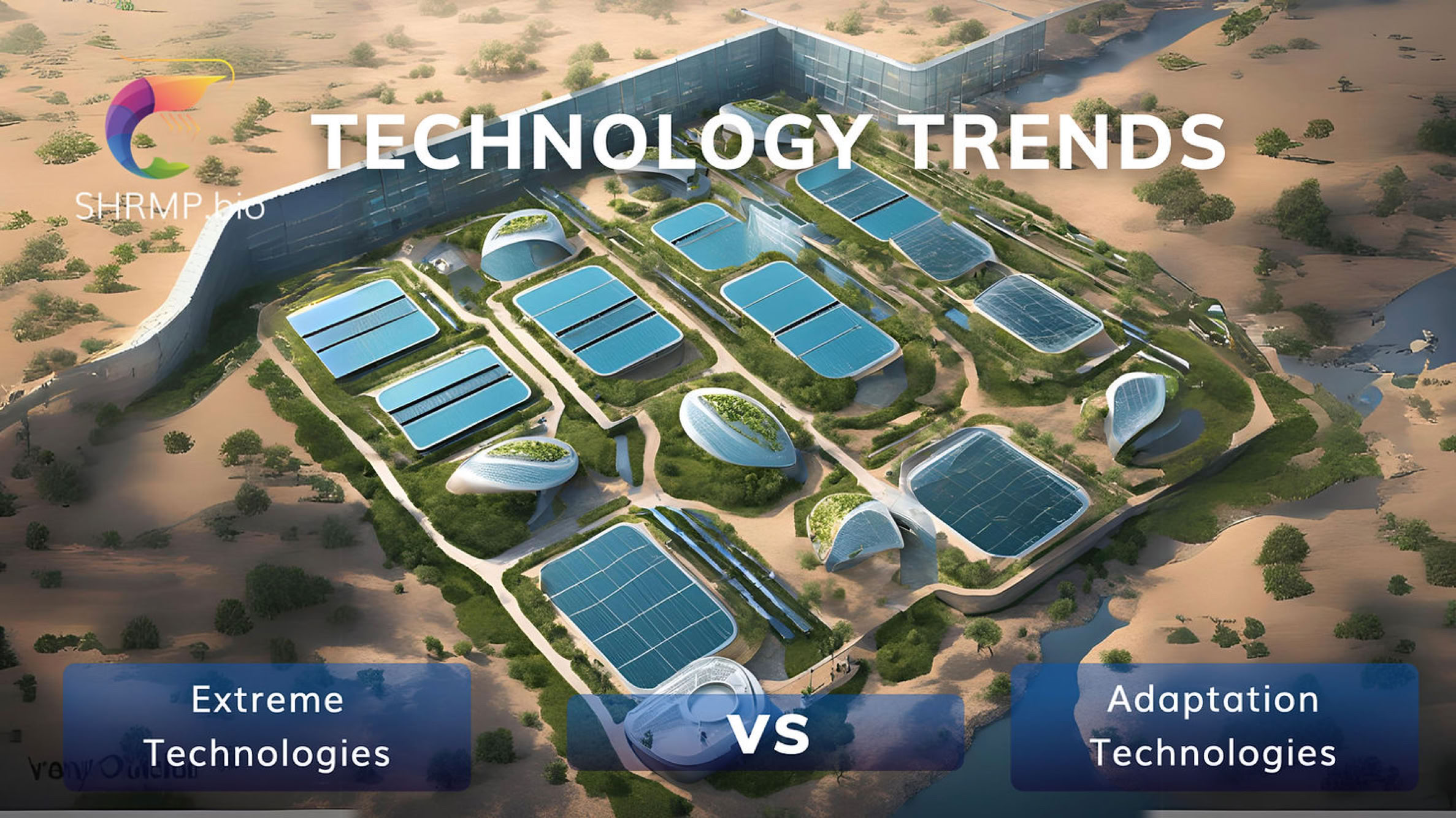
Before we dive into our scenarios that intersect technology trends with climate change over the coming articles, let's start with a brief background on how we have categorised technology trends into two main groups:
“Extreme Tech” vs “Adaptation Tech”
1. Extreme Tech - This category includes innovative approaches to food production that may have a slower acceptance rate under normal circumstances. Examples include technologies related to autonomous remote farming in the deep sea, fully integrated automated hybrid systems for animal and plant food production, cultured meat, 3D-printed food, and biotechnological gene editing of food sources.
2. Adaptation Tech - This category focuses on gradual adaptations and increased efficiencies in today's methods of production. It primarily involves the full adoption of Industry 4.0 in manufacturing processes, demand-driven production, reduction of inputs (such as energy and feed), and optimising growth based on advanced traditional biological approaches, including breeding and feeding.
From a technological perspective, both categories are highly intriguing, and there are some truly fascinating developments occurring in each. The question is more about which of the approaches under development will have a bigger relevance or impact in the future.
Below are some examples to illustrate where the coming years will take us.
Extreme Tech
Adaptation Tech
Do it differently
Do what we do - just better
Artificial (enclosed) growth systems (on-shore, urban, desert)
Establish high-intensity techniques in areas that are not high-intensity yet (including knowledge transfer approaches)
Autonomous remote farming (deep-sea, off-shore)
Integrated Co-culture with plants in combined automated production systems (& seawater adaptation of plants)
Digitalisation -> Data-driven supply chain & process automation from Hatchery to consumer
Lab-grown/cultured meat
Precise demand forecasting and production
Additive/3D-printed food production
Constant and reliable production
Genetic modification of species using gene-editing (or accelerated “traditional” breeding / evolutionary methods):
Fully transparent and optimised supply chain
Reduced Energy consumption and emissions (Production and Logistics)
Microfermentation of nutrients
Decentralised or in-transit manufacturing/maturation
Faster trait “selection”
Augmentation of natural products with new traits
Reduced water and feed consumption
“Grow at home” Systems
Reduced waste-loss
Biology:
Genetics assisted breeding
Rapid pathogen detection and disease treatment
Improved feed composition and technologies
Recent Posts

SUBSCRIBE
Stay in the loop about the Future of Seafood.
Subscribe
Get in touch: go@shrmp.bio
© 2024 by SHRMP.bio - thefutureofseafood.com
